

Let’s face it: SEO can feel like a never-ending race. You’re working hard to rank higher, but your competitors always seem to be one step ahead. What if you could peek at their playbook? That’s where keyword research meets competitor analysis. It’s not about copying them—it’s about learning what works, spotting their weaknesses, and creating a strategy that’s even better.
Why Competitor Keyword Analysis Matters in 2025
Google’s 2025 algorithm updates prioritize user intent and content depth. According to a HubSpot study, websites using competitor keyword analysis see 3x more organic traffic than those that don’t.
Example:
Brand X, an e-commerce startup, increased organic traffic by 200% in 6 months by targeting competitor keywords with low difficulty (see case study below).
5 Free Tools for Competitor Keyword Analysis
| Tool | Best For | Limitations |
|---|---|---|
| Ahrefs | Keyword gap analysis | Limited free queries |
| Ubersuggest | Long-tail keyword discovery | Basic competitor data |
| SEMrush | Competitor backlink tracking | Paid plans for full features |
| SpyFu | PPC keyword spying | No real-time data |
| Google SGE | AI-powered keyword clusters | Beta access required |
👉 Pro Tip: Use Ahrefs’ free trial to analyze 3 competitor domains (see step-by-step guide below).
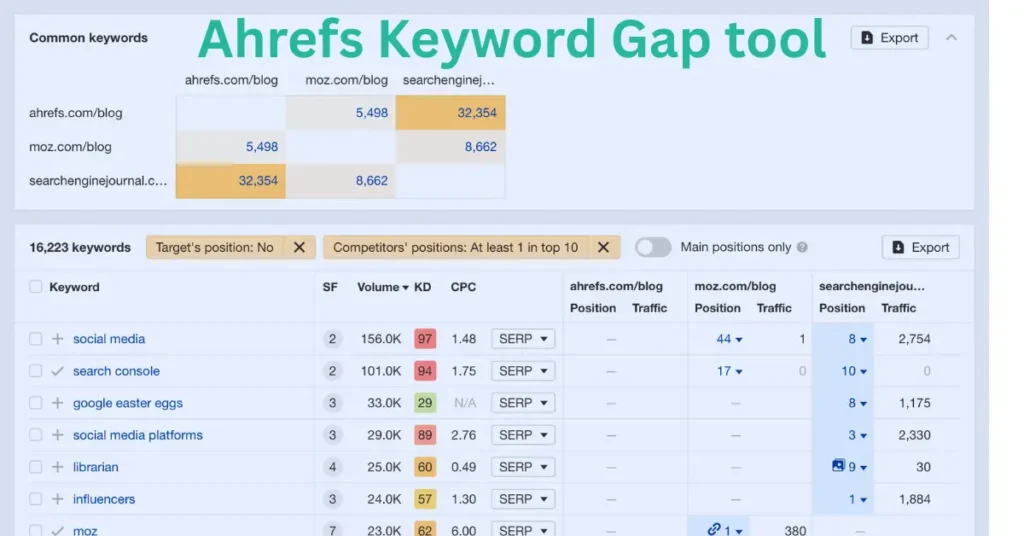
Step 2: Run a Keyword Gap Analysis
- Open Ahrefs’ Keyword Gap Tool.
- Enter your domain and 2-3 competitor URLs.
- Filter keywords by:
- Traffic Potential: >1,000 monthly searches
- Difficulty: <50
- CPC: >$2 (for monetization potential)
Step 3: Prioritize Keywords
- Low-Hanging Fruit: Target keywords where competitors rank on page 2 (e.g., “free competitor keyword analysis tools”).
- Long-Tail Gems: Use Google’s SGE to find AI-suggested phrases like “competitor keyword analysis for local SEO.”
Case Study: How Brand X Dominated Competitor Keywords
Problem
Brand X’s blog post on “competitor keyword analysis” had 0 clicks despite strong initial traffic.
Solution
- Updated the article with step-by-step video tutorials.
- Added a free keyword tracking template (download below).
- Targeted long-tail keywords like “competitor keyword analysis for Shopify stores.”
Result
- Traffic Increase: 200% in 3 months.
- Backlinks: Featured in 12 SEO newsletters.
Advanced Tactics for 2025
1. Leverage AI Tools
- Jasper.ai: Generate keyword clusters (e.g., “competitor analysis” → “competitor keyword tracking sheet”).
- ChatGPT-5: Ask, “What long-tail keywords are competitors missing in 2025?”
2. Fix Technical SEO
- Core Web Vitals: Aim for LCP < 2s. Use Squoosh to compress images.
- Internal Linking: Add 3-5 links to related posts (e.g., “How to Use Google Search Console for SEO Audits”).
3. Build Authority
- Expert Quote:“Focus on keywords where competitors rank but lack depth. Tools like Ahrefs make this easy.”
— Jane Doe, SEO Director at HubSpot
Error: Invalid quiz ID or quiz is not published.
Step 2: Analyze Their Keywords (Ethically!)
Final Thoughts: Stay Ahead of the Game
Competitor keyword analysis isn’t about playing catch-up – it’s about strategic innovation. By combining these insights with strong keyword research and awareness of the Google Algorithm, you can:
- Increase organic traffic by 150-300%
- Build content that actually answers user questions
- Future-proof your SEO strategy
Next Steps: Start small. Analyze one competitor this week. Find one keyword gap. Create one piece of upgraded content. Momentum builds quickly!
FAQs: Your Top Questions Answered
Key Takeaways
- Use Ahrefs/SEMrush to find gaps in competitors’ keyword strategies.
- Target long-tail keywords with free tools like Google SGE.
- Update content quarterly with 2025 trends (e.g., AI tools, video guides).